
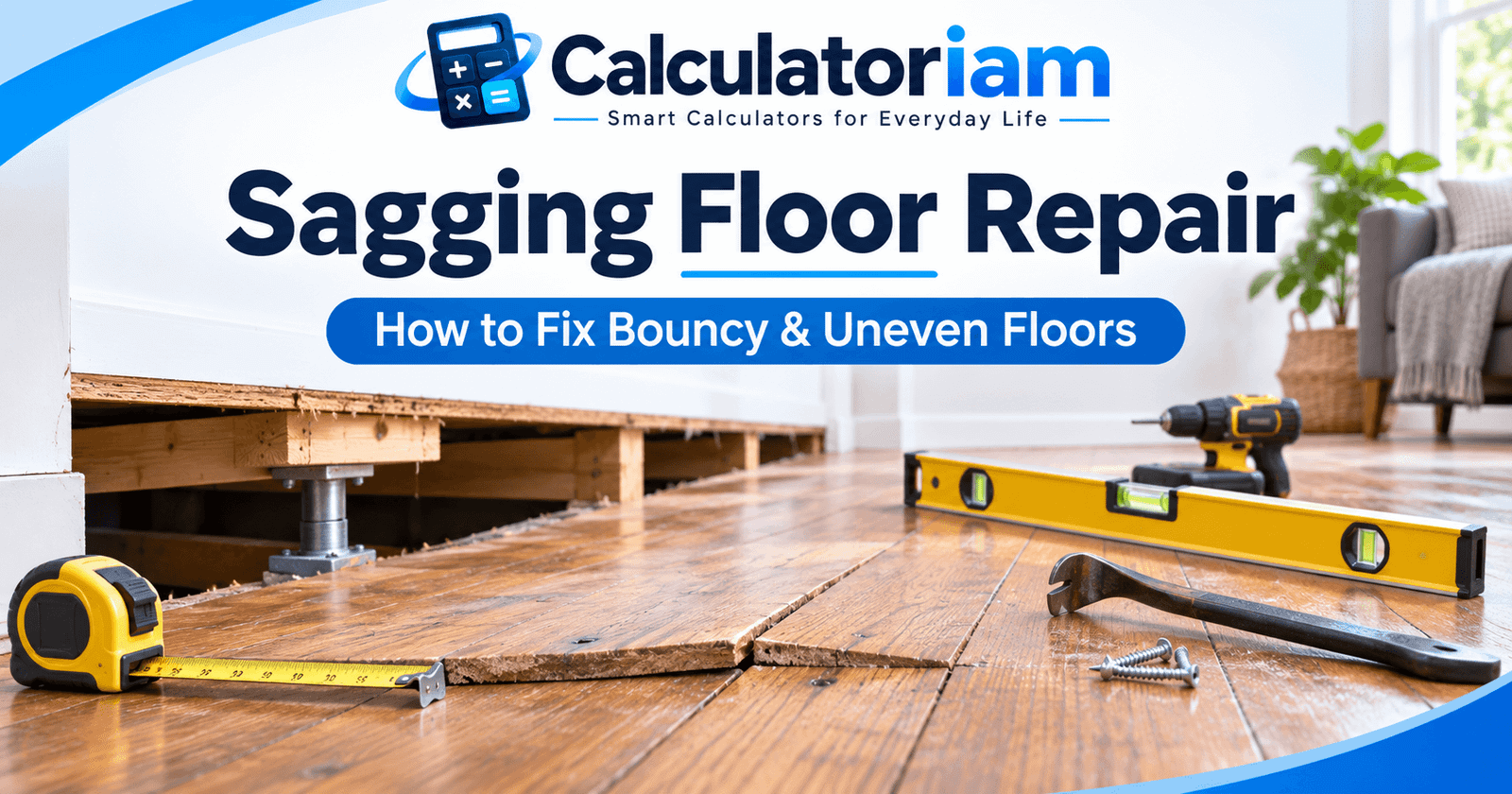
How to Repair Damaged, Squeaky & Uneven Floors
Sagging, squeaky, or uneven floors can affect your home’s comfort, appearance, and stability. While some flooring problems come from loose boards or damaged surface materials, others may indicate issues with the subfloor, floor joists, or foundation. Therefore, identifying the cause is the first step in successful sagging floor repair.
A floor that moves when you walk across it, slopes toward one side, or feels soft underfoot should not automatically be treated as a cosmetic problem. Instead, inspect the affected area and determine whether the issue involves the finished flooring or the supporting structure.
This guide explains common floor problems, how to identify their causes, available repair approaches, and when professional assistance is necessary.
What Causes Floors to Sag, Bounce, or Become Uneven?
Several problems can affect the condition of a floor. Some develop gradually as materials age, while others appear after moisture exposure, structural movement, or changes to the building.
1. Damaged or Weak Floor Joists
Floor joists support the subfloor and transfer loads to the building’s supporting structure. When these components become damaged, weakened, or improperly supported, the floor may develop excessive movement.
Common warning signs include:
- Noticeable sagging between supporting walls.
- Bouncy areas when walking.
- Cracked or deteriorated timber.
- Uneven flooring across a room.
2. Moisture and Water Damage
Water leaks, poor drainage, and persistent moisture can damage wooden flooring and subfloor materials.
For example, prolonged exposure can cause wood to swell, warp, soften, or deteriorate. Consequently, the finished floor may become uneven or develop soft spots.
3. Foundation Settlement
Foundation movement can affect the level of floors throughout a property.
When the supporting foundation settles unevenly, connected structural components may move as well. As a result, floors can develop slopes, gaps, and changes in elevation.
4. Loose Subfloor Panels
Subfloor panels provide a base for the finished flooring. However, loose connections or damaged panels can allow movement when people walk across the surface.
This movement may produce squeaking, clicking, or a springy feeling underfoot.
5. Inadequate Structural Support
Floor systems depend on properly designed beams, joists, posts, and bearing connections.
If a supporting component is missing, damaged, or incorrectly modified, the floor may experience excessive deflection. Therefore, structural support problems should be assessed before attempting repairs.
6. Age-Related Flooring Deterioration
Older homes may develop floor problems as building materials age.
Wood can deteriorate, fasteners can loosen, and previous repairs may become ineffective. Nevertheless, an uneven floor in an older house does not automatically indicate structural failure.
Signs That Your Floor Needs Repair
Recognizing early warning signs can help you identify a problem before additional damage develops.
Visible Sagging or Sloping
A sagging floor may appear lower in the middle of a room or along a particular section. In some cases, the difference becomes noticeable when furniture does not sit evenly.
Use a straightedge or level to identify changes in the surface. However, measurements alone cannot determine the structural cause.
Bouncy or Springy Flooring
A bouncy floor moves noticeably when someone walks across it.
This may result from loose subfloor connections, excessive joist deflection, or inadequate structural support. If the movement is widespread or increasing, arrange an appropriate inspection.
Squeaking and Creaking Sounds
Squeaking often happens when two flooring components rub against each other.
For example, a loose floorboard may move against a fastener or supporting surface. Additionally, changes in humidity can cause wooden materials to expand or contract, contributing to movement.
Soft or Spongy Areas
A soft floor may indicate moisture damage, deteriorated subflooring, or weakened supporting materials.
Pay particular attention to areas near bathrooms, kitchens, plumbing connections, and exterior doors.
Gaps and Cracks
New gaps between boards, separation near walls, and visible cracks may accompany flooring or structural movement.
Similarly, doors and windows that suddenly become difficult to operate can indicate movement elsewhere in the building.
Important: The U.S. Department of Housing and Urban Development identifies sagging, buckling, misaligned, or unattached subfloors as conditions requiring inspection. Surface abnormalities can provide clues, but the underlying condition must be evaluated separately.
How to Identify the Cause of a Sagging Floor
Before choosing a repair method, determine which part of the floor system is affected.
Step 1: Examine the Floor Surface
Start by inspecting the entire affected room.
Look for:
- Uneven or sloping sections.
- Loose or damaged floorboards.
- Raised edges and gaps.
- Water stains or discoloration.
- Soft or spongy areas.
- Cracked tiles or lifting floor coverings.
Record the location of each problem. This information can help identify whether the damage is isolated or spread across the room.
Step 2: Measure Floor Level Differences
Use a suitable straightedge, spirit level, or laser level to compare floor elevations.
Measure the difference between the highest and lowest points. Additionally, note the horizontal distance between measurement locations.
Keep the measurements for comparison during future inspections. However, do not assume that a particular slope percentage automatically indicates whether a floor is structurally safe.
Step 3: Inspect Accessible Subfloor Areas
If safe access is available from a basement or crawl space, examine the underside of the affected flooring.
Look for:
- Loose subfloor connections.
- Water stains.
- Deteriorated wood.
- Visible cracks.
- Displaced supports.
- Signs of insect damage.
Never enter an unsafe crawl space or disturb structural components during a basic inspection.
Step 4: Check for Moisture
Investigate possible plumbing leaks, drainage problems, and previous water exposure.
For example, a soft section near a bathroom may be related to a leaking plumbing connection. Therefore, correcting the moisture source is essential before replacing damaged flooring.
Step 5: Arrange a Structural Assessment When Needed
If the floor has significant sagging, widespread movement, or damaged supporting components, contact a qualified structural professional.
A professional can evaluate the floor framing, connections, and supporting foundation to determine the appropriate repair.
How to Repair a Squeaky Wood Floor
Squeaky flooring is often related to movement between floorboards, subfloor panels, and supporting components.
The correct repair depends on where the noise originates.
Secure Loose Floorboards
If the problem is limited to a loose finish board, an appropriate flooring fastener may help secure it.
Use a fastening method suitable for the specific flooring material. Before drilling, check for hidden pipes, wiring, and other services.
Repair Loose Subfloor Connections
Sometimes, the noise comes from movement between the subfloor and joists.
An accessible loose connection may require suitable fastening or professional repair. Nevertheless, adding screws without identifying the source of movement may not solve the problem.
Replace Damaged Floorboards
Cracked, broken, or severely deteriorated boards may require replacement.
Choose compatible replacement materials and follow the flooring manufacturer’s installation instructions. Afterward, check that the repaired section sits correctly against adjoining boards.
How to Fix a Bouncy Floor
A bouncy floor may indicate excessive movement within the floor assembly.
Before attempting any repair, determine whether the movement comes from the finished flooring, subfloor, or structural framing.
Identify Loose Flooring Components
If the problem is limited to loose boards or subfloor connections, localized fastening or replacement may resolve it.
However, the repair must suit the floor construction and material.
Inspect Floor Joists
Damaged, weakened, or excessively flexible joists may contribute to noticeable floor movement.
A structural professional can determine whether reinforcement, replacement, or another repair method is appropriate.
Evaluate Supporting Beams and Posts
In some situations, inadequate or displaced supports contribute to floor movement.
Consequently, the entire load path must be evaluated before adding or changing structural supports. An improvised post or support may create additional problems if it is not properly designed.
How to Repair a Sagging Floor
Sagging floor repair depends on the location, severity, and underlying cause of the problem.
A damaged floorboard requires a different solution from a weakened joist or settling foundation.
Repair Damaged Subfloor Sections
If the damage is limited to the subfloor, affected panels may need to be repaired or replaced.
First, identify the extent of the deterioration. Next, determine whether the supporting framing is sound.
Only after the underlying problem has been addressed should new floor covering be installed.
Reinforce or Replace Damaged Joists
Damaged floor joists may require structural reinforcement or replacement.
The appropriate method depends on the joist dimensions, material condition, span, loads, and supporting connections. Therefore, structural work should follow a professional assessment rather than an improvised repair.
Correct Inadequate Structural Support
Damaged beams, displaced posts, and inadequate bearing connections can contribute to sagging.
A qualified professional can assess the supporting structure and specify an appropriate correction. In addition, the supporting foundation must be considered when designing any new support.
Address Foundation-Related Movement
If the floor problem originates from foundation settlement, repairing the visible flooring alone will not solve it.
Instead, the foundation and connected structural components should be evaluated first. Any necessary correction should be planned according to the actual site conditions.
Repair Moisture-Damaged Materials
If water exposure has damaged the flooring assembly, correct the moisture source before replacing materials.
Depending on the condition, affected boards, subfloor panels, or structural components may require replacement.
How to Fix an Uneven Floor
Uneven floors can result from surface irregularities, damaged subflooring, or structural movement.
Therefore, choose the repair according to the source of the problem.
1. Identify High and Low Areas
Use a straightedge or level to identify differences in floor elevation.
Mark the affected areas and record their measurements. For larger rooms, a laser level can help compare elevations across multiple points.
2. Repair the Subfloor
If the unevenness comes from damaged or poorly supported subfloor panels, the affected sections may require repair or replacement.
Before installing new flooring, ensure that the supporting surface is sound and suitable for the selected product.
3. Apply a Compatible Floor-Leveling Compound
Minor surface irregularities may be corrected with an appropriate floor-leveling compound.
Before application, check:
- Approved substrate materials.
- Maximum application thickness.
- Surface preparation requirements.
- Primer compatibility.
- Drying and curing instructions.
- Suitable finished flooring types.
However, leveling compound cannot correct significant structural sagging or inadequate floor support.
4. Investigate Significant Floor Slopes
A noticeable slope across a room may indicate structural movement or foundation settlement.
For this reason, investigate the cause before attempting to level the surface.
How to Repair Damaged Wood Floorboards
Wood flooring can develop scratches, dents, cracks, stains, and warped sections.
The repair method depends on the material and severity of the damage.
Repair Minor Scratches
Light surface scratches may sometimes be improved through suitable cleaning, polishing, or refinishing.
However, the treatment must be compatible with the existing finish.
Fix Dented Floorboards
Small dents may be repairable using appropriate wood-floor restoration methods.
Deep dents, broken edges, or damaged finishes may require refinishing or board replacement.
Replace Broken Floorboards
Severely cracked or broken boards may need replacement.
Choose material with compatible dimensions, thickness, species, and installation requirements. Additionally, check that the replacement is suitable for the existing floor system.
Repair Warped or Lifted Wood Flooring
Wood flooring can warp or lift because of moisture exposure, inadequate expansion space, or installation problems.
First, identify the underlying cause. Then determine whether the affected boards can be restored or need replacement.
Importantly, do not force lifted boards back into position without understanding why they moved.
How to Repair a Sagging Floor in an Old House
Older houses may develop uneven floors as materials age and supporting components deteriorate.
Common causes include:
- Weakened wooden joists.
- Deteriorated beams.
- Foundation settlement.
- Moisture damage.
- Previous structural alterations.
- Inadequate supporting connections.
However, not every sloping floor in an older property requires major structural work.
A professional inspection can establish whether the condition is longstanding, cosmetic, or related to an active structural problem.
What to Check in an Older House
Pay particular attention to:
- Areas where the floor slopes noticeably.
- Changes around doorways and supporting walls.
- Soft or deteriorated floor sections.
- Signs of previous water damage.
- Accessible beams, joists, and posts.
- Cracks or movement near the foundation.
Avoid attempting to raise an old floor rapidly. Where structural lifting is appropriate, the correction must be carefully planned to avoid damaging connected building components.
How to Estimate Flooring Replacement Materials
When a damaged floor requires replacement, accurate measurements help estimate the amount of new flooring to purchase.
Start by measuring the room’s length and width.
For a rectangular room:
A=L\times W
Where:
- A = Floor area.
- L = Room length.
- W = Room width.
For example, consider a room measuring 15 feet long and 12 feet wide.
A=15\times12=180\text{ ft}^2
The room has a floor area of 180 square feet.
Next, consider the flooring product’s coverage per box and the appropriate waste allowance.
You can use the Calculatoriam Flooring Calculator to estimate floor area, full flooring cartons, waste allowance, and optional material and labor costs.
Enter the actual coverage and prices shown by your flooring supplier. Remember that this calculator estimates flooring quantities and costs; it does not diagnose structural damage or calculate repair requirements.
Tools and Materials for Floor Inspection and Repair
The required equipment depends on the flooring material and the source of the problem.
Common inspection and repair tools include:
- Tape measure.
- Spirit level.
- Straightedge.
- Laser level.
- Flashlight.
- Drill or driver.
- Hammer.
- Pry bar.
- Utility knife.
- Suitable saw.
- Protective gloves.
- Safety glasses.
- Replacement floorboards.
- Compatible subfloor panels.
- Appropriate flooring fasteners.
Some structural repairs require specialized equipment and professional installation.
Therefore, identify the problem before purchasing materials or starting work.
Common Floor Repair Mistakes to Avoid
Certain mistakes can hide existing problems or make them worse.
| Mistake | Why It Causes Problems | Better Approach |
|---|---|---|
| Covering a sagging floor with new flooring | Hides the visible problem without correcting its cause | Inspect the underlying floor system |
| Ignoring moisture damage | Deterioration may continue | Correct the water source first |
| Using improvised supports | Can create unsafe load conditions | Obtain a professional structural assessment |
| Applying leveling compound over structural sagging | Does not correct structural movement | Investigate the supporting structure |
| Raising a floor too quickly | May damage connected building components | Use a professionally planned correction |
| Ignoring damaged joists | Structural deterioration may continue | Arrange an appropriate inspection |
| Replacing only visible floorboards | May leave damaged subflooring underneath | Examine the affected flooring layers |
Additionally, do not assume that every squeak or uneven section requires structural reinforcement. Instead, select a repair that matches the actual cause.
When Should You Call a Professional?
Some minor flooring repairs may be manageable for experienced homeowners. However, significant structural movement requires professional assessment.
Contact a qualified structural professional when:
- A floor has noticeable or worsening sagging.
- Large sections feel soft or unstable.
- Floor joists appear cracked or deteriorated.
- Supporting beams or posts appear displaced.
- Extensive moisture damage is present.
- Large cracks develop around doors or walls.
- Doors and windows suddenly become difficult to operate.
- The floor changes noticeably over a short period.
- The foundation may have settled.
- You are uncertain about the building’s structural condition.
If a floor feels unsafe or shows signs of possible structural failure, restrict access to the affected area until it has been assessed.
A professional can evaluate the floor assembly and determine whether the problem requires surface repairs, structural reinforcement, or foundation work.
Frequently Asked Questions About Sagging Floor Repair
Can a sagging floor be repaired?
Yes. Many sagging floors can be repaired, but the appropriate solution depends on the underlying cause. Possible approaches include repairing damaged subflooring, reinforcing structural joists, correcting inadequate support, or addressing foundation-related problems.
What causes a floor to sag in the middle?
A floor may sag in the middle because of excessive joist deflection, inadequate support, damaged structural members, or foundation movement. An inspection is necessary to identify the specific cause.
Are bouncy floors dangerous?
Not every bouncy floor indicates serious structural damage. However, significant movement, worsening deflection, soft areas, or visible deterioration should be investigated.
How do you fix a bouncy wooden floor?
First, identify whether the movement comes from loose floorboards, subfloor connections, or structural framing. Minor connection problems may require suitable repairs, while structural movement may need professionally designed reinforcement.
Can you fix an uneven floor without replacing it?
Yes, in some situations. Minor surface irregularities may be corrected using a compatible leveling product or localized repair. However, significant structural slopes require investigation and correction of the underlying cause.
How do you stop a wooden floor from squeaking?
Squeaking often results from movement between floorboards, fasteners, and subfloor components. Identify the moving connection first, then select a repair method suitable for the flooring construction.
Can you repair a sagging floor in a crawl space?
Yes, depending on the cause and condition of the supporting structure. A crawl space may provide access to joists, beams, and connections. Nevertheless, structural repairs should be based on a professional assessment.
Should you buy a house with sagging floors?
A house with sagging floors is not automatically unsuitable for purchase. However, arrange a professional inspection before making a decision. The assessment can help identify the cause, repair requirements, and potential costs.
How much floor sag is acceptable?
There is no single universal measurement that determines whether every floor is acceptable. Allowable deflection depends on the structural system, span, materials, loading, and applicable requirements. Consequently, significant or unusual sagging should be assessed by a qualified professional.
Can a sagging floor be fixed without replacing the floorboards?
Sometimes. If the problem originates from accessible supporting components or loose subfloor connections, the finished boards may not need replacement. However, damaged or deteriorated boards may require removal and replacement.
Final Thoughts
Sagging, squeaky, bouncy, and uneven floors can develop for several reasons. Some problems involve loose floorboards or surface irregularities, while others affect the subfloor, joists, supporting beams, or foundation.
Successful sagging floor repair starts with identifying the underlying cause. Next, choose a repair approach that addresses the actual problem instead of simply hiding visible damage.
For minor flooring issues, suitable repairs may be manageable with the right materials and tools. However, significant structural movement or deterioration should be evaluated by a qualified professional.
Ultimately, correcting the underlying problem is more important than simply making the floor look level.