
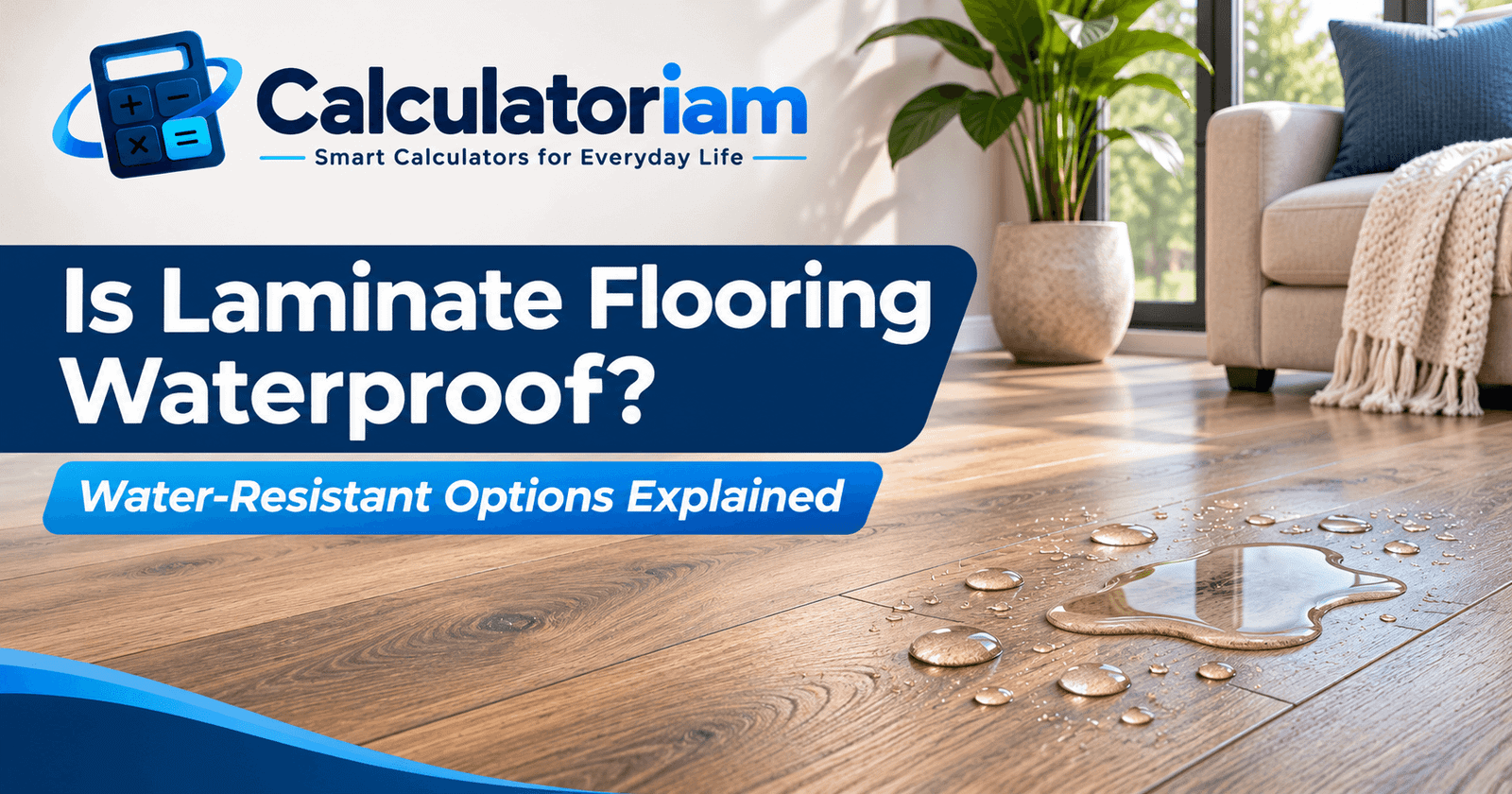
Is Laminate Flooring Waterproof? Water Resistance Guide
Traditional laminate flooring is not waterproof. Although its top protective layer can handle normal household wear, moisture can still enter through plank joints, exposed edges, or damaged areas. Once water reaches a moisture-sensitive core, the boards may swell, buckle, or lose their original shape.
Modern manufacturers have improved laminate flooring by introducing treated cores, protective coatings, and tighter locking systems. These products offer better resistance to everyday spills and moisture, but their performance depends on the specific product.
Understanding the difference is important:
| Flooring Type | Water Protection | Main Limitation |
|---|---|---|
| Standard laminate | Limited moisture tolerance | Prolonged exposure can cause swelling and buckling |
| Water-resistant laminate | Enhanced protection against everyday spills | Protection is limited by product specifications |
| Waterproof-marketed laminate | Higher level of product-specific water protection | Installation conditions and warranty exclusions still apply |
The distinction matters because a floor advertised as waterproof does not necessarily make the entire installed flooring system waterproof.
According to the Building America Solution Center’s water-resistant flooring guidance, excessive saturation, spills, and standing water can cause laminate planks to swell and buckle. Building America Solution Center+1
Why Does Water Damage Laminate Flooring?
Most conventional laminate flooring uses a wood-based core beneath its decorative surface. This construction provides a durable flooring product, but the core can be vulnerable when moisture penetrates the protective layers.
Several situations can lead to water damage.
1. Water Entering Through Plank Joints
Laminate flooring typically uses a click-lock installation system. Although specialized locking profiles can improve moisture protection, water may still reach the vulnerable areas if the joints are not adequately protected.
Small spills around plank connections should be cleaned promptly.
2. Moisture Reaching the Edges
Cut edges, doorways, wall connections, and exposed transitions can create vulnerable areas. If water reaches these locations, it may travel beneath the flooring.
As a result, damage can appear around the perimeter even when the visible surface initially looks unaffected.
3. Standing Water and Prolonged Spills
Leaving water on laminate for an extended period increases the risk of moisture penetration. Common causes include:
- Leaking refrigerators or dishwashers.
- Washing machine leaks.
- Overflowing sinks.
- Water spills around pet bowls.
- Wet footwear and accumulated rainwater.
- Plumbing leaks beneath or around flooring.
4. Moisture Coming From the Subfloor
Water does not always come from above. Concrete slabs and other mineral subfloors can contain residual moisture.
A water-resistant laminate surface does not automatically protect against moisture coming from underneath. For this reason, manufacturers specify subfloor preparation and moisture-protection requirements.
For example, EGGER’s installation instructions require suitable subfloor moisture conditions and specify moisture-protection layers for mineral subfloors. egger.com
How Waterproof Is Modern Laminate Flooring?
Some modern laminate products provide considerably better moisture protection than traditional flooring. However, manufacturers use different product technologies and publish their own protection periods.
The following examples illustrate how product specifications can differ.
| Manufacturer / Product | Published Water Protection |
|---|---|
| EGGER NatureSense | No dedicated moisture protection |
| EGGER NatureSense Aqua | Up to 24 hours |
| EGGER NatureSense Aqua+ | Up to 72 hours |
| Floor & Decor AquaGuard | Up to 30 hours against everyday household spills and wet mopping |
These figures are manufacturer-specific claims, not a universal industry rating or a directly comparable test result. Always check the conditions attached to each claim. quality built on experience+1
Water-Resistant Laminate Flooring
Water-resistant laminate is designed to provide additional protection against everyday moisture.
Depending on the product, manufacturers may use:
- Treated core materials.
- Moisture-resistant locking profiles.
- Protective coatings.
- Improved plank-edge treatments.
- Specialized installation systems.
These improvements can make water-resistant laminate a practical option for certain household environments.
However, the protection period and permitted applications must be confirmed through the manufacturer’s documentation.
Waterproof Laminate Flooring
Some manufacturers market specialized laminate collections as waterproof. These products are designed to offer stronger protection against liquid exposure.
For instance, EGGER’s NatureSense Aqua+ uses an HDF Aqua+ core and a specialized click system, with published water protection of up to 72 hours.
That does not mean every laminate product from the same manufacturer offers identical protection. The exact collection, installation method, and warranty conditions matter. quality built on experience
How to Choose the Best Waterproof Laminate Flooring
Choosing suitable laminate flooring requires more than comparing colors, thicknesses, and prices. You should also evaluate its actual moisture-protection capabilities.
Consider these factors before purchasing.
1. Check the Manufacturer’s Water-Resistance Rating
Start by checking the technical specifications of the exact flooring collection.
Look for information about:
- Water-resistance duration.
- Protection against household spills.
- Locking-joint technology.
- Core-board construction.
- Approved installation locations.
- Cleaning and maintenance requirements.
Do not rely exclusively on packaging descriptions such as waterproof, water-resistant, or spill-proof.
2. Look for Independent Product Testing
Third-party testing can provide additional confidence when comparing laminate products.
The North American Laminate Flooring Association (NALFA) maintains the LF-01 performance certification standard. Its requirements include moisture resistance alongside other performance characteristics.
NALFA also describes optional Surface Swell and Water Resistance certifications. Its Surface Swell Test evaluates how an assembled laminate joint system responds to prolonged water exposure.
Therefore, check whether the exact product has relevant additional testing rather than assuming that general laminate certification means unlimited waterproof protection.
Read the NALFA Product Certification Standards for details. NALFA
3. Examine the Core Material
The core is an important part of laminate flooring construction.
Traditional products commonly use wood-fiber-based boards, while specialized collections may use treated core materials designed to improve moisture resistance.
When comparing products, examine:
- Core-board material.
- Moisture-protection technology.
- Plank-edge construction.
- Locking-system design.
- Manufacturer testing information.
A decorative surface alone cannot tell you how well the complete plank handles moisture.
4. Review the Warranty Conditions
A warranty is particularly important when purchasing waterproof laminate flooring.
Check whether it covers:
- Everyday household spills.
- Wet cleaning.
- Water penetration through joints.
- Swelling or buckling.
- Kitchen or bathroom installations.
- Moisture originating beneath the floor.
- Damage caused by plumbing leaks or flooding.
Some products have specific exclusions for permanent moisture exposure, standing water, or incorrect installation.
Read the complete warranty rather than relying on a short promotional description.
5. Consider Thickness and Plank Quality
Laminate flooring is available in different thicknesses, including 7 mm, 8 mm, 10 mm, and 12 mm options.
However, thicker laminate is not automatically waterproof.
Thickness, surface durability, core construction, and moisture protection are separate product characteristics. For example, EGGER publishes different plank thicknesses and moisture-protection levels within its NatureSense collection.
Choose thickness according to the manufacturer’s specifications and your intended application, not simply because a product is advertised as 12 mm waterproof laminate. quality built on experience
Where Can You Install Water-Resistant Laminate Flooring?
The suitability of laminate depends on its construction and the moisture conditions of the room.
Living Rooms and Bedrooms
Standard laminate is commonly suitable for dry living spaces when installed according to the manufacturer’s instructions.
Bedrooms, living rooms, and home offices generally have fewer opportunities for prolonged water exposure.
Water-resistant products can provide additional protection against occasional spills.
Kitchens
Kitchens experience moisture from cooking, cleaning, sinks, and household appliances.
A laminate product specifically approved for kitchen applications can be considered. However, clean spills promptly and check the manufacturer’s requirements around sinks, dishwashers, and other water sources.
Standard laminate should not automatically be considered suitable for every kitchen.
Bathrooms
Bathroom installations require particular attention.
Some specialized laminate products are approved for certain private bathroom applications. However, this approval does not necessarily extend to every bathroom configuration.
For example, EGGER’s 2025 installation instructions permit specified moisture-resistant products in private bathrooms with a bathtub or shower tray, no floor drain, and only temporary, brief exposure to splashing water.
The same instructions exclude shower cubicles, saunas, steam baths, swimming pool areas, bathrooms with floor drains, and areas with permanent or increased moisture exposure.
This is why the exact product installation instructions must determine suitability. egger.com
Basements and Laundry Rooms
Basements and laundry rooms can experience moisture from plumbing leaks, damp concrete, appliances, or water entering from outside.
Even a product with enhanced surface protection may not be appropriate if the underlying moisture conditions are unsuitable.
Check the subfloor requirements, moisture barrier specifications, and warranty restrictions before installing laminate in these spaces.
Showers and Permanently Wet Areas
Ordinary laminate flooring should not be installed in shower enclosures or areas exposed to continuous standing water.
For locations that regularly become wet, consider flooring materials specifically designed for those conditions. The Building America Solution Center identifies ceramic tile, stone, and vinyl among the suitable hard-surface options for areas likely to get wet. Building America Solution Center
What Should You Do If Laminate Flooring Gets Wet?
Quick action can help reduce the possibility of water damage.
Follow these practical steps when liquid spills onto laminate flooring.
- Remove standing water: Use a clean, absorbent cloth to collect the liquid as soon as possible.
- Dry the affected area: Wipe the surface and pay attention to plank connections and nearby edges.
- Check the surrounding area: Look for water around appliances, walls, doorways, and transitions.
- Investigate the source: If the water comes from a leak, stop the source before continuing.
- Inspect for visible damage: Look for swelling, raised edges, gaps, or changes in the plank surface.
- Follow manufacturer instructions: If water has entered beneath the flooring, consult the manufacturer or a qualified flooring professional about the appropriate inspection and repair.
Avoid leaving standing water on the floor, even when the manufacturer advertises enhanced moisture protection.
How to Clean Water-Resistant Laminate Flooring
Regular maintenance helps preserve the flooring surface.
Follow these general practices:
- Sweep or vacuum regularly using suitable equipment.
- Use a lightly damp mop when permitted by the manufacturer.
- Avoid excessive water during cleaning.
- Use cleaning products approved for the flooring.
- Dry accidental spills promptly.
- Avoid abrasive cleaning products that may damage the protective surface.
EGGER’s care guidance recommends dry sweeping or light damp mopping and advises against standing water and aggressive cleaning products. quality built on experience
Estimate How Much Laminate Flooring You Need
Before purchasing laminate flooring, calculate the total floor area and the number of cartons required.
Room dimensions alone are not enough. You should also consider the coverage printed on each flooring package and an appropriate allowance for cutting and fitting.
Use the Calculatoriam Flooring Calculator to estimate:
- Total room square footage.
- Flooring quantities for multiple rooms.
- Additional material for cutting waste.
- Number of flooring cartons.
- Material costs.
- Optional installation labor estimates.
Enter the actual coverage printed on your selected laminate flooring carton rather than relying on an assumed package size.
Important: The calculator estimates quantities and costs. It does not determine whether a particular laminate product is suitable for bathrooms, kitchens, or moisture-prone environments. Square Feet, Boxes & Cost
Frequently Asked Questions
Is laminate wood flooring completely waterproof?
No. Standard laminate flooring is not waterproof. Specialized products offer improved moisture protection, but their performance depends on the manufacturer’s specifications, installation requirements, and warranty conditions.
Can waterproof laminate flooring be installed in a bathroom?
Some specialized products are approved for particular private bathroom applications. However, not every waterproof-marketed laminate is suitable for bathrooms, shower enclosures, or permanently wet areas. Always check the exact product instructions.
Does thicker laminate flooring provide better water resistance?
Not necessarily. Thickness and water resistance are separate characteristics. A thicker plank does not automatically have a more moisture-resistant core or better-protected locking joints.
What happens when water gets underneath laminate flooring?
Moisture beneath the flooring can affect the core, cause swelling, and damage the planks. It can also create problems for the subfloor. The source of moisture should be identified and addressed rather than simply drying the visible surface.
How long does waterproof laminate flooring last?
There is no single lifespan for all waterproof laminate products. Durability depends on product quality, installation, maintenance, usage, and exposure to moisture. Follow the manufacturer’s specifications and warranty for the particular flooring collection.
Is water-resistant laminate suitable for commercial spaces?
Some specialized laminate collections are designed for commercial applications. However, check both the moisture-protection specifications and the product’s approved commercial-use classification before purchasing.
Final Thoughts
Laminate flooring offers an attractive combination of appearance, durability, and practical installation options. However, its ability to handle moisture varies considerably between traditional and specialized products.
Standard laminate should be treated as a moisture-sensitive flooring material, while water-resistant and waterproof-marketed collections provide additional protection under defined conditions.
Before buying, compare the core construction, locking system, water-resistance claims, installation requirements, and warranty limitations. Most importantly, select flooring according to the actual moisture conditions of the room rather than relying on the word waterproof alone.



2 Comments